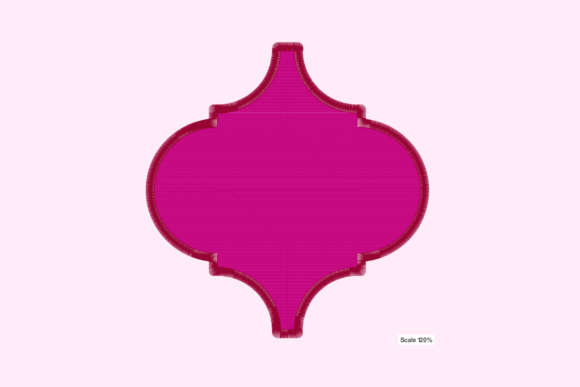
Pink Arabesque Tile: A Designer's Review for Branding
As an embroidery designer who spends most of my days digitizing logos and testing files for small business clients, I approach every new machine embroidery design with a critical eye. It is not just about whether a pattern looks pretty on a screen; it is about how that digital embroidery file translates into a tangible asset that builds brand identity. Recently, I had the opportunity to review the Pink Arabesque Tile, a piece categorized under Intricate Cuts within the broader Embroidery market. My goal was to determine if this design holds up under the rigorous demands of commercial use, from staff uniforms to high-end boutique merchandise.
First Impressions: Elegance Meets Handmade Charm
Upon loading the Pink Arabesque Tile into my simulation software, the immediate visual impact was one of refined elegance mixed with a playful, handmade spirit. The arabesque motif suggests a classic, almost architectural beauty, while the specific choice of pink softens the geometry, making it feel approachable and friendly. For a small business owner, this duality is gold. It feels premium enough for a high-end florist or a boutique bakery, yet rustic and creative enough for a handmade craft studio or an Etsy seller looking to elevate their packaging.
The design does not scream "corporate" in a sterile way; instead, it whispers "artisan." This is crucial for modern brands where customers value the human touch. However, because it falls under the category of Intricate Cuts, my first concern was immediately regarding stitch density. Intricate designs can sometimes be too delicate for heavy-duty workwear, so I knew I had to evaluate where this design would shine and where it might struggle.
Real-World Application for Small Business Merch
The true test of any embroidery file is its versatility in real-world scenarios. I envisioned several use cases for the Pink Arabesque Tile across different industries:
- Boutique Apparel: Placed as a subtle chest logo accent on a linen button-down or a denim jacket, this design adds a unique flair that distinguishes a brand from competitors using generic text logos.
- Café and Bakery Uniforms: Imagine this stitched onto a crisp white apron. The apron embroidery would serve as a mark of quality, suggesting that the food inside is made with the same care as the stitch work.
- Tote Bags and Packaging: As a tote bag design, the tile pattern works beautifully as a central focal point. It transforms a simple canvas bag into a reusable piece of art that customers will want to carry around, effectively turning them into walking billboards.
- Event Merchandise: For local markets or pop-up shops, this design could be applied to limited edition patches. An embroidered patch featuring this tile could be included as a free gift with purchase, enhancing customer loyalty.
The description notes that the design comes with multiple options, which is a significant plus for custom apparel decorators. Having size variations allows us to scale the design appropriately for different substrates without losing detail integrity.
Technical Considerations and Placement Strategy
While the aesthetic appeal is high, a professional reviewer must address the technical limitations. Because Pink Arabesque Tile features intricate details, placement is everything. I would advise against using this on the front of a structured cap embroidery project unless the cap material is very smooth and the hoop size allows for a large enough presentation. Curved surfaces can distort fine lines, causing the "cuts" in the design to merge or pucker.
Furthermore, fabric texture plays a massive role. On a coarse canvas or a heavily textured towel, the fine details of an arabesque pattern might get lost. This design performs best on medium-to-smooth fabrics like twill, cotton poplin, or felt. If you are planning to use this on dark uniforms, you must carefully review the thread colors. The default pink may need adjustment to ensure sufficient contrast against navy or black backgrounds. A lack of contrast can make an intricate design look muddy from a distance.
Another critical factor is durability. Items that require frequent industrial washing, such as restaurant staff shirts, need robust stitching. If the stitch density is too low in the connecting areas of the tile pattern, the design may fray over time. It is essential to check the underlay settings in your machine or request a denser version from the creator if available.
Elevating Brand Identity and Customer Trust
In the crowded marketplace of small business, visual consistency is key to building trust. Using a distinctive element like the Pink Arabesque Tile across various touchpoints creates a cohesive narrative. When a customer sees the same elegant tile on your website, your product tag, and your shop assistant's apron, it signals professionalism. It tells the buyer that you care about the details.
This level of detail increases the perceived value of the finished product. A plain tote bag sells for a certain price; a tote bag featuring a custom, intricate embroidery design commands a higher price point. It shifts the perception from a commodity to a handmade product worthy of collection. For Etsy sellers and crafters, this differentiation is often the difference between a browsing visitor and a paying customer.
Practical Notes for Production
Before running a production batch for a client, I always follow a strict checklist to ensure the commercial embroidery job goes smoothly. Here are my specific recommendations for the Pink Arabesque Tile:
- Test in Monochrome First: Stitch a sample in black thread on white fabric. This removes the distraction of color and lets you clearly see if the spacing and outlines hold up.
- Verify Hoop Size: Ensure the design fits comfortably within your available hoop size without needing excessive re-hooping, which can lead to alignment issues.
- Stabilizer Selection: Given the intricate nature, use a high-quality cut-away stabilizer rather than tear-away. This provides long-term support for the detailed stitches and prevents distortion.
- Create a Printable Mockup: Before stitching, create a printable mockup to show the client. Visualizing the design on the actual garment helps manage expectations regarding size and placement.
- Check Licensing: Always confirm the commercial licensing terms. Since this is intended for small business merch, you must ensure you have the right to sell items featuring this design.
- Review File Details: The product description mentions the design comes with multiple options but does not specify exact stitch counts or formats. Always download and inspect the specific file formats (PES, DST, EXP, etc.) to ensure compatibility with your machines before promising a deadline to a client.
In conclusion, the Pink Arabesque Tile is a versatile and visually striking asset for any creative entrepreneur. While it requires careful handling regarding fabric choice and stabilization, its ability to convey elegance and artisanal quality makes it a standout choice for branded patches, uniforms, and boutique goods. By respecting its intricate nature and applying it strategically, small business owners can leverage this design to create memorable, high-value merchandise that resonates with their audience.