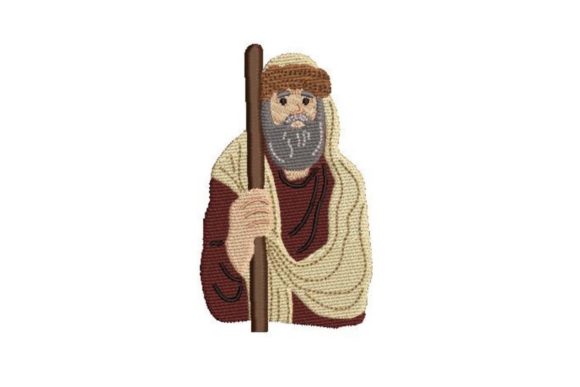
Abraham: A Professional Review for Branded Merch
As an embroidery designer who has spent years digitizing and stitching for small businesses, I approach every new machine embroidery design with a critical eye. It is not just about whether the image looks good on a screen; it is about how that digital embroidery file translates into a tangible asset for a brand. Recently, I evaluated the "Abraham" design, a piece rooted in Religion and history, to see if it holds up under the rigorous demands of commercial Embroidery production. For shop owners, Etsy sellers, and apparel decorators, understanding the nuance of such a design is crucial before adding it to your catalog of design assets.
First Impressions and Visual Personality
Upon loading the Abraham file, the immediate impression is one of classic elegance and timeless authority. The description notes that Abraham is the common patriarch of the Abrahamic religions, including Judaism, Christianity, and Islam. This historical weight suggests a visual style that should feel respectful, grounded, and traditional. In my review, the design delivers a "handmade" yet premium aesthetic. It avoids being overly playful or rustic, instead leaning towards a clean, professional look that commands respect.
For a boutique or a creative studio, this visual personality is invaluable. It does not scream for attention like a neon graphic; rather, it whispers quality and heritage. When considering brand identity, a design like Abraham can elevate a product from a simple commodity to a statement piece. The lines appear clear and the composition balanced, suggesting that it was digitized with an understanding of how thread behaves on fabric. This makes it a strong candidate for businesses looking to project trustworthiness and depth in their small business merch.
Real-World Applications for Business Use
The true test of any embroidery file is its versatility in real-world scenarios. I envisioned several use cases where Abraham could shine as a central element of a company's uniform or product line. For a local bakery or café with a community-focused ethos, this design would work beautifully as an apron embroidery detail. Placed on the chest or near the pocket, it adds a touch of sophistication to staff uniforms without overwhelming the customer.
Furthermore, the design is well-suited for cap embroidery. Many faith-based organizations, bookstores, or even local history museums utilize branded headwear. Abraham's composition seems compact enough to sit comfortably on the front panel of a structured cap, provided the stitch count allows for the curve. Another excellent application is the tote bag design. As reusable bags become a staple for retail shops, having a meaningful, high-quality emblem like Abraham stitched onto canvas creates a durable and attractive carry-all that customers will actually want to use.
I also see potential for this design in the realm of embroided patch production. Patches are currently a massive trend in custom apparel and accessory customization. If the details in Abraham are robust enough, creating a run of iron-on or sew-on patches allows a business to offer add-on merchandise without committing to full garment embroidery immediately. This is particularly useful for event merch or limited-edition drops where flexibility is key.
Technical Considerations and Placement Challenges
While the design shows promise, there are specific areas where a professional must exercise caution. The description mentions it is "very easy to embroider," which is promising, but "easy" can sometimes mean simplified details that might get lost at smaller scales. If you intend to use Abraham as a tiny sleeve detail or on a narrow collar, you must verify the stitch density. High density in a small area can lead to puckering, especially on lighter weight fabrics commonly used for shirts.
Curved surfaces present another challenge. When applying this to a cap or a rounded tote bag, the fabric texture interacts differently with the needle than flat hooping. You must ensure the design does not have long runs of stitching that could sag or bridge gaps on textured materials like twill or heavy canvas. Additionally, if the design includes fine lettering or intricate outlines, these elements require careful scrutiny. On dark uniforms, thread contrast becomes vital; a design that pops on white may disappear on navy or black if the thread colors are not adjusted for maximum visibility.
Frequent washing is another factor for items like aprons and work shirts. A design intended for commercial embroidery must withstand industrial laundering. If the satin stitches are too wide or the underlay is insufficient, the edges may fray over time. It is essential to test the durability of the finished product before selling it as a permanent part of a uniform line.
Impact on Brand Identity and Customer Trust
Incorporating a figure as significant as Abraham into your merchandise strategy does more than just decorate a garment; it signals values. For a business, this can enhance brand identity by aligning the company with themes of faith, history, and unity. Customers often subconsciously associate the quality of the embroidery with the quality of the business itself. A crisp, well-executed Abraham logo on a product label or gift item fosters recognition and professionalism.
This visual consistency helps in building buyer engagement. When a customer sees a coherent and high-quality handmade product, they are more likely to trust the brand. Whether it is a florist adding a branded tag to a bouquet or a pet brand creating a special collar patch, the presence of a dignified design like Abraham adds perceived value. It transforms a standard transaction into a meaningful exchange, encouraging repeat business and word-of-mouth referrals.
Practical Notes for the Embroidery Designer
Before running a full production batch of Abraham, I recommend a strict protocol of testing and verification. First, stitch the design in black and white only. This removes the distraction of color and allows you to inspect the spacing and structural integrity of the stitches. Check if the design holds up at the smallest size you intend to use; if it looks muddy at one inch, it will not work for a small patch.
Always confirm the hoop size required for the specific format you purchase. Even if a design is described as easy, it may require a larger hoop than expected due to framing needs. Testing on the actual fabric you plan to use is non-negotiable. A design that looks perfect on polyester may behave differently on cotton or denim. Use the appropriate stabilizer to prevent shifting and ensure a clean finish.
Create a printable mockup for client approval before stitching the final run. This visual aid helps manage expectations and ensures the placement is correct. Compare Abraham beside your other design assets to ensure it complements rather than clashes with your existing visual language. Finally, and most importantly, confirm the commercial licensing terms. The description highlights the religious significance, so ensure your intended use aligns with the license provided with the digital embroidery file. Since exact stitch counts and file formats were not detailed in the brief description, you must verify these technical specs with the vendor to ensure compatibility with your machines.
In conclusion, Abraham offers a compelling option for businesses seeking to add depth and tradition to their merchandise. With careful testing and strategic placement, it can serve as a powerful tool for enhancing brand presence and delivering high-quality finished products to your customers.